
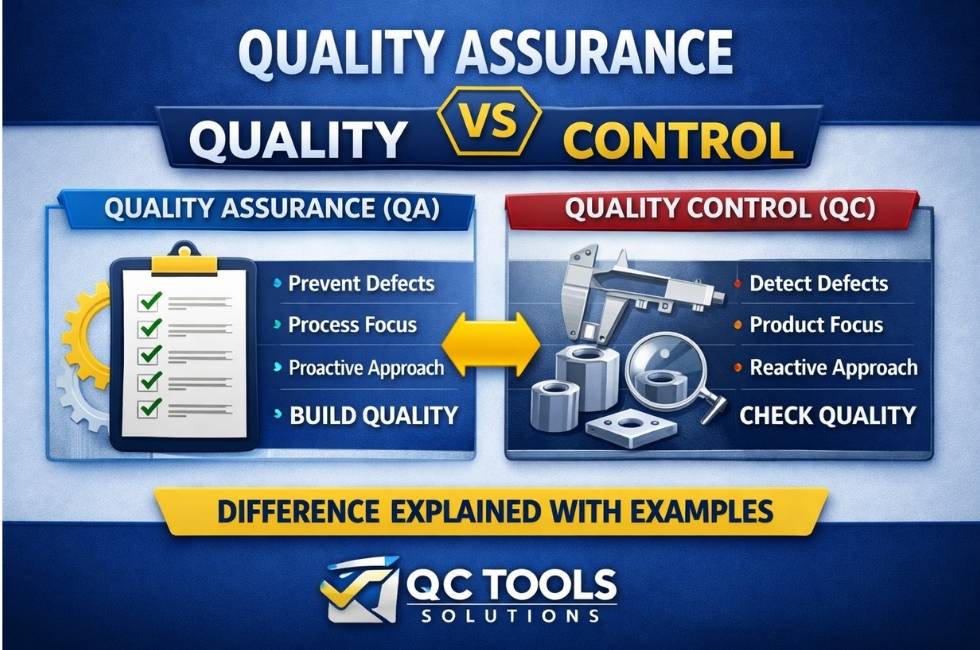
What is Quality Assurance (QA)?
Quality Assurance (QA) is a proactive approach focused on improving processes to prevent defects before they occur. It ensures that the right methods, systems, and standards are in place so that products are developed correctly from the beginning.
In simple terms, QA is about building quality into the process.
Key activities in QA include:
- Developing Standard Operating Procedures (SOPs)
- Conducting internal audits
- Process improvement initiatives
- Training employees
- Implementing quality management systems
Quality Assurance is widely used in manufacturing, automotive, and service industries to ensure consistent quality output.
- What is Quality Assurance (QA)?
- What is Quality Control (QC)?
- Quality Assurance vs Quality Control (QA vs QC Difference)
- Quality Assurance vs Quality Control Examples
- Why both QA and QC are important ?
- QA vs QC in Automotive Industry
- Benefits of implementing QA and QC
- Common mistakes in QA and QC
- Frequently Asked Questions (FAQ)
- Quality Control:
- Quality Assurance:
- Conclusion
- Need Expert Support?
What is Quality Control (QC)?
Quality Control (QC) is a reactive approach focused on identifying defects in finished products through inspection and testing.
In simple terms, QC is about checking the quality of the final product.
Key activities in QC include:
- Product inspection
- Testing and measurement
- Verification of specifications
- Use of inspection tools and gauges
- Final product approval
QC ensures that defective products are identified and corrected before reaching the customer.
Quality Assurance vs Quality Control (QA vs QC Difference)
Understanding the difference between quality assurance and quality control is essential for any quality professional.
| Parameter | Quality Assurance (QA) | Quality Control (QC) |
|---|---|---|
| Focus | Process | Product |
| Approach | Proactive | Reactive |
| Objective | Prevent defects | Detect defects |
| Responsibility | Entire organization | QC team / inspectors |
| Stage | Before production | During and after production |
| Example | SOP, audits | Inspection, testing |
Quality Assurance vs Quality Control Examples
Real-life examples make the concept easy to understand.
QA Examples:
- Creating SOPs for production processes
- Training operators before starting work
- Conducting process audits
QC Examples:
- Checking dimensions of parts using instruments
- Inspecting finished products
- Testing product performance
These examples highlight that QA focuses on prevention, while QC focuses on detection.
Why both QA and QC are important ?
Both Quality Assurance and Quality Control are essential for a strong quality management system.
- QA ensures the process is correct
- QC ensures the product is correct
- Together, they reduce defects and improve customer satisfaction
Without QA, processes may fail. Without QC, defective products may reach customers.
QA vs QC in Automotive Industry
In the automotive sector, both QA and QC play critical roles.
QA Activities:
- APQP (Advanced Product Quality Planning)
- FMEA (Failure Mode and Effects Analysis)
- Control Plan development
QC Activities:
- Incoming inspection
- In-process inspection
- Final inspection
- Use of SPC tools
This combination ensures compliance with standards like IATF 16949 and improves supplier quality.
Benefits of implementing QA and QC
Organizations that implement both QA and QC effectively gain:
- Improved product quality
- Reduced rework and rejection
- Lower manufacturing cost
- Higher customer satisfaction
- Better compliance with standards
Common mistakes in QA and QC
Many organizations make these mistakes:
- Relying only on QC and ignoring QA
- Lack of proper documentation
- Inadequate training of employees
- Poor implementation of quality systems
Avoiding these mistakes is critical for long-term success.
Frequently Asked Questions (FAQ)
What is the difference between QA and QC?
QA focuses on preventing defects by improving processes, while QC focuses on detecting defects in products.
Is QA better than QC?
Both are equally important and serve different purposes in quality management.
Can QA exist without QC?
QA can exist independently, but QC is necessary to verify product quality.
Which comes first QA or QC?
QA comes first as it establishes the process, followed by QC to verify the output.
Quality Control:
Quality control is a process employed to ensure a certain level of quality in a product and process. It may include whatever actions an industry takes to provide for the control and verification of certain characteristics of a product and process. The basic goal of quality control is to ensure that the product meets specific requirements.
As per ISO 9001:2015 standard Clause 3.3.7,
Quality control is ” Part of quality management focused on fulfilling the quality requirement.”
Quality Assurance:
Quality assurance is the activity of providing evidence to establish confidence that quality requirements will be met. It also means assuring the customer that he can purchase a product with confidence. Quality assurance covers all activities from design, development, production, documentation, verification and validation. Quality assurance ensures do it right the first time.
As per ASQ, quality assurance is the planned and systematic activities implemented in a quality system so that the quality requirements for a product or service will be fulfilled.
As per ISO 9001:2015 standard Clause 3.3.6,
Quality Assurance is ” Part of quality management focused on providing that confidence that quality requirements will be fulfilled”
Conclusion
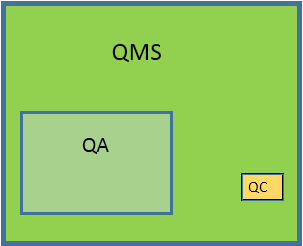
The difference between quality control and quality assurance lies in their approach and focus. QA is process-oriented and preventive, while QC is product-oriented and corrective. Both are essential for delivering high-quality products and maintaining customer satisfaction.
For professionals in manufacturing and quality management, understanding and implementing QA and QC effectively can significantly improve performance and business growth.
Need Expert Support?
If you are looking to implement QA and QC systems in your organization, you can get professional support for:
- IATF 16949 consulting
- Vendor system audits as per VSA Check Sheet
- Process improvement training
Contact QC Tools Solutions to improve your quality systems and achieve better results.