Calibration Procedure for Measuring Instruments (2026 Guide)
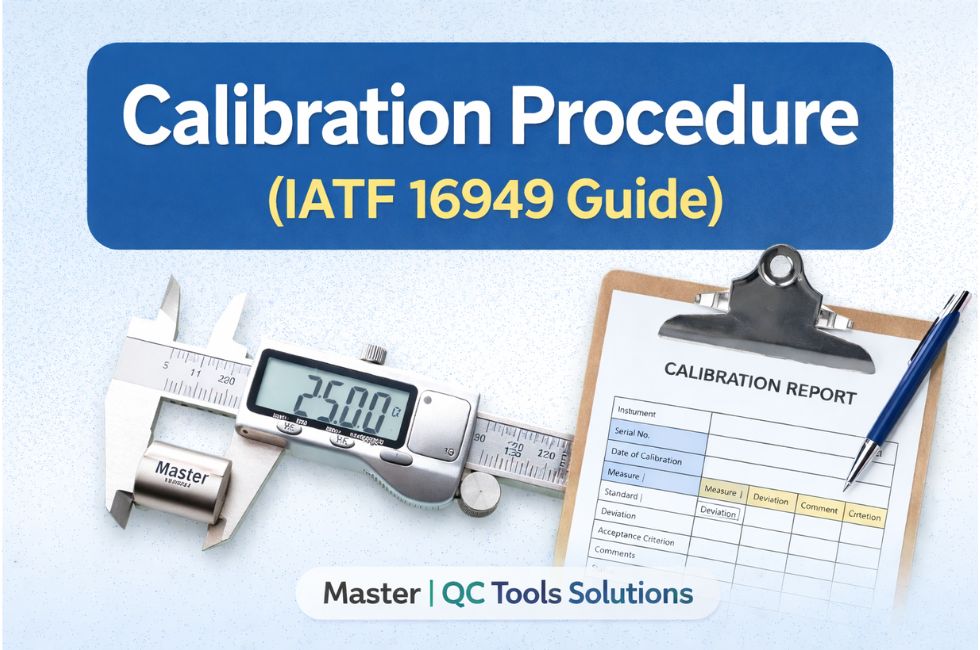
Calibration Procedure

Calibration is a critical requirement in ISO 9001 and IATF 16949 to ensure measurement accuracy and product quality. Any error in measuring instruments can lead to rejection, customer complaints, and audit non-conformities. In this guide, you will learn the complete calibration procedure with practical industry examples, formats, and audit requirements. What is Calibration? Calibration is … Read more
Temporary Change of Process Control as per IATF 16949 |Complete Guide

Temporary change of process control

In automotive manufacturing, production processes are designed with defined controls to ensure consistent product quality. However, situations may arise where the primary process control becomes unavailable or ineffective due to equipment failure, tool damage, gauge breakdown, manpower issues, or other unexpected conditions. In such cases, organizations must implement a controlled temporary solution to maintain product … Read more

Process Audit & Product Audit explained with latest checklist

Product & Process Audit

Product and process audits are essential quality assurance tools used across manufacturing industries, especially in automotive OEMs, Tier 1 & Tier 2 suppliers. These audits verify whether processes follow the defined standards and whether the final product meets customer requirements. In the automotive sector governed by IATF 16949, both process audits and product audits play … Read more

AI in QMS Implementation: Roadmap with Real Case Study

AI in QMS

Introduction Artificial Intelligence (AI) is changing how quality management works. It helps companies find problems early, predict defects, improve supplier quality, and save time during audits. However, many companies find it difficult to start because of unclear goals, poor data, or a lack of training. This simple guide explains how to bring AI into your … Read more

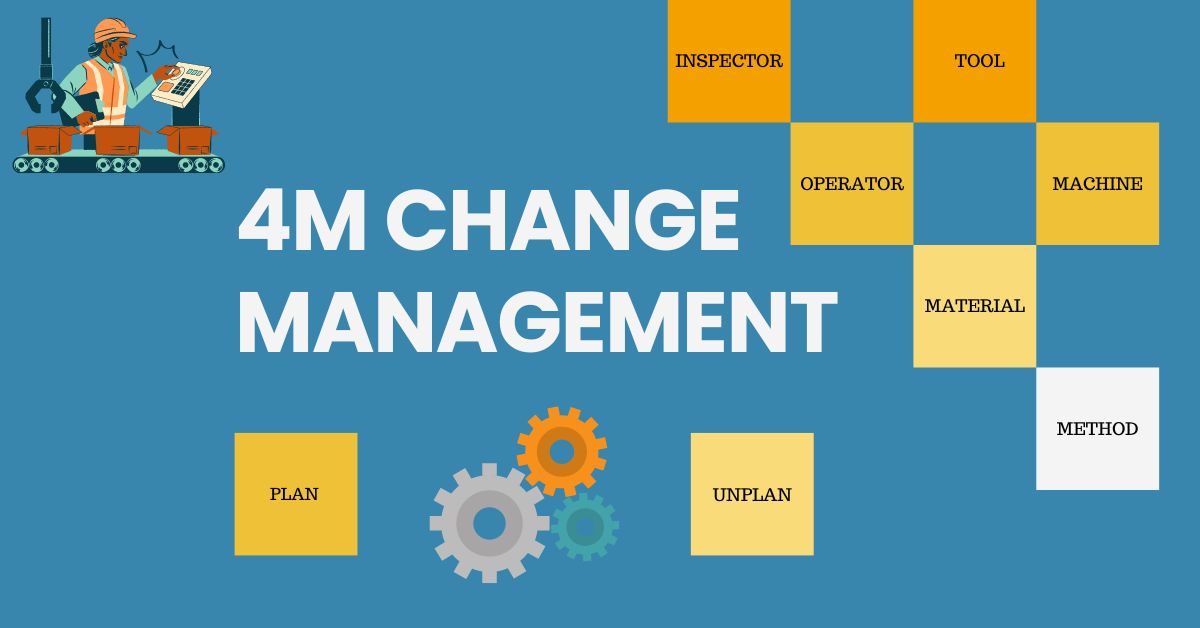
4M Change Management in Automotive Industry: Guide, Examples & Benefits

4M CHANGE MANAGEMENT

In the fast-paced automotive industry, small changes in Man, Machine, Material, or Method (4M) can have a big impact on product quality and customer satisfaction. Managing these changes systematically helps organizations reduce risks, improve traceability, and comply with standards like IATF 16949. This article explains the purpose, scope, examples, tools, and benefits of 4M Change … Read more

Process of handling, storage, packaging and delivery of products

Handling, storage, packaging & delivery of products

Process Scope This process is applicable for maintaining a system for timely receipt, storage and issue of materials from Stores and on-time delivery of products to the customer as per their requirement. Process Owner STORE-IN CHARGE Process description Handling of BOP/Raw Material: Colour coding of Raw Material Issue of Raw Material/ BOP Components to Production … Read more

Control of non conforming products in manufacturing

Control of Non Conforming products

Process Scope: This process is applicable to establish a system for the identification and disposition of non conforming products at all stages i.e., Incoming, In-process, Finished stages and Customer return. Process Owner: HOD Quality Process Description: Process to control Incoming Rejection: Non-conforming Products at all stages (incoming, in-process & final) shall be identified with a … Read more

Continual improvement process a mandatory requirement for IATF 16949

Purpose: This process is applicable to establish and maintain a system for continual improvement of the Quality Management System (Product/Process/Documented System) and its effective implementation throughout the organization. Process Owner: Management Representative Process Description for Continual Improvement: Identification of improvement opportunities: This is done in a variety of ways as under Quality objectives: Management review … Read more

How to do coherence of documents and standard management

Standard Management

Purpose: Coherence between all the documents, such as the Customer Inspection Standard of parts with the Control Plan, Operation Standard, Inspection Standard, and packing Standard, is essential. Properly defining the standards can prevent rejection and rework and thus improve OEE and COPQ. Responsibility : S.No Activity   Responsibility Frequency 1 Review of the Standards/ Format/ … Read more

Procedure for handling abnormality in Quality

Handling abnormality in quality

Purpose: To understand clearly abnormality and abnormal situations, to make operators understand abnormality and abnormal situations, and to standardize further the rules and routes to handle such situations. To learn about handling abnormality in quality. Scope: Handling in-process complaints, supplier complaints & customer complaints and abnormal situations. Abnormal situation: An abnormal situation occurs when a … Read more